A flame in the darkness
iAbout Press releases
As part of our continuing efforts to bring you as much information about our region as possible we offer readers a press release service that allows private firms, public agencies, non-governmental organisations and other groups to submit relevant press releases on our website.
All press releases in this section are published in their full length and have not been edited.
If you have a press release or other announcement you would like to have published, please send it to [email protected].
We reserve the right to reject press releases we deem irrelevant or inappropriate.
All material submitted to The Arctic Journal, including pictures and videos, will be assumed to be available for publication by The Arctic Journal and its related entities.
The Foregrounder is the The Arctic Journal’s series of occasional articles offering insight into events and topics that will be in the news in the coming days. If you have a subject you think should be addressed, please please contact us.
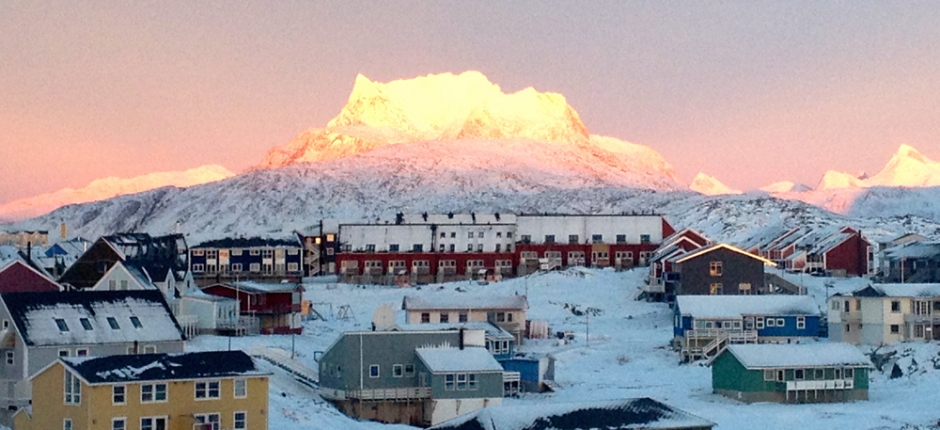
On Saturday, the moment Greenland has been preparing for for over two years arrives. Over 2,000 athletes from nine territories, from Alaska in the west to Yamal in the east, will gather in Nuuk for the 2016 Arctic Winter Games.
Once the cauldron is lit on Sunday and the opening ceremony is over, it will be the athletes and their accomplishments that take the stage. This is as it should be. They don’t call these ‘games’ without reason.
But, there will be more. The event is being called the biggest in Greenland’s history. The sporting world is thick with hyperbole. But facts are facts, and Nuuk’s population will grow by 10% during the week. This is the same number of guests per capita that Rio de Janeiro is expected to see during the 2016 Summer Olympics.
SEE RELATED: The waiting is the hardest part
Before the games can begin, the organisers have had to tackle details like transport, accommodation and food. Working to do so, it is hoped, will more than just facilitate the games. It is the intention that the experience gained will benefit the country in the long run. This, according to Noah Mølgaard, a journalist for AG, a Greenlandic weekly published by this website’s parent company, has been the case in the past.
Mr Mølgaard, who has covered every AWG since 1994, recalls that the 2002 games, which Nuuk co-hosted with Iqaluit, did make a lasting contribution to the city, particulalry in the form of greater participation in community events and sport.
Weather is a fourth consideration for the organisers, though it is one they can do little about. So far it has caused problems in the form of a lack of snow. Snow-making machines and trucked-in snow have helped alleviate this problem somewhat. On Saturday, weather forecasters warn that the weather will again prove uncooperative: a major storm is predicted and could strand hundreds of participants in Kangerlussuaq, Greenland’s international airport and the staging point for an airbridge that will transport most participants to Nuuk.
Should the weather cause a major disruption, it would be tempting to say I told you so about the decision to hold the games in a city whose airport is regularly affected by inclement weather. Many in Kangerlussuaq today were already pointing out the flawed thinking behind placing the games in Nuuk.
SEE RELATED: True north, true games
This may be little more than capital envy, but should the organisers not get a good beginning to the end of their efforts, it would be unfair to criticise them for their work, which has involved more than just organising a sporting event.
Regular readers of this website will be familiar with Greenland as a country where problems abound, be they economic, political or social. Greenland is not alone in this respect, and many of the regions sending participants to Nuuk will recognise Greenland’s troubles as issues they too face.
The problems Greenland faces existed before the Arctic Winter Games, and they will exist after. Rather than sweep them under the rug while the guests are here, it has sought to do something about them. Amongst the organisers’ secondary critera were to provide job training to 500 people. This has been done.
A second goal has been to seek to instill a sense of national pride. Also done: some 1,700 people, most of them Greenlanders, and not all of them from Nuuk, are registered as volunteers. Many of those who are not helping out directly have done so indirectly, through their jobs or in other ways. Everyone else can follow along on TV. KNR, a broadcaster, will cover the games closely.
The third goal, promoting Greenland internationally, will be hard to measure. But there will be over 100 reporters from scores of countries in Nuuk this week. Ostensibly, their primary role is to report about the athletes and their accomplishments. They will also be looking for something to criticise, particulalry the social issues Greenland is infamous for: suicide, poverty, joblessness, alcoholism, child abuse. These will not be hard to find. What these reporters hopefully will not ovelook is a population that believes playing games is not antithetical to solving its problems.
The Arctic Journal will be reporting from the Arctic Winter Games this week. We will also be working with journalists from Sermitsiaq, our parent company, and journalism students from Ilisimatusarfik (the University of Greenland) to publish Ulu News, a daily publication. Editions of Ulu News will be available for download from our site each day, and we will publish selected articles separately.