Present imperfect
iAbout Press releases
As part of our continuing efforts to bring you as much information about our region as possible we offer readers a press release service that allows private firms, public agencies, non-governmental organisations and other groups to submit relevant press releases on our website.
All press releases in this section are published in their full length and have not been edited.
If you have a press release or other announcement you would like to have published, please send it to [email protected].
We reserve the right to reject press releases we deem irrelevant or inappropriate.
All material submitted to The Arctic Journal, including pictures and videos, will be assumed to be available for publication by The Arctic Journal and its related entities.
The Foregrounder is the The Arctic Journal’s series of occasional articles offering insight into events and topics that will be in the news in the coming days. If you have a subject you think should be addressed, please contact us.
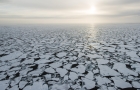
The annual minimum sea-ice extent in the Arctic is still two or three weeks off, but there are already a couple of things we can say about it with some confidence: it will in all likelihood be the second lowest on record and it will be held up as more bad news about the state of the climate.
Another thing we know is that, for all the attention the announcement will get, the measurement will not tell us the whole story about the state of sea ice in 2016.
“In reality, it’s the volume you want to know about.” says Stefan Hendricks, a climate scientist with AWI, a German polar-research institute. “Thickness is more valuable in telling you how resilient sea ice is because it gives you an idea of how much is going to stick around from one year to the next.”
SEE RELATED: Everyone’s talking about sea ice
Measuring volume – which involves determining how thick ice is – is hard. Until the 2010 launch of CryoSat-2, a Eruopean satellite, obtaining thickness measurements required using submarines or drilling through the ice at individual points. Neither process gave a complete picture. And even with CryoSat-2, obtaining accurate thickness data can be difficult.
But even though scientists might prefer to have volume measurements, there are still plenty of good reasons why extent remains the bellwether.
First and foremost: us. “Humans are drawn to the extreme points, and, unlike something like thickness, the difference from one year to the next is something that can be easily shown,” says Kim Holmén, a scientist currently serving as the international director of Norsk Polar Institutt, a Norweigan research outfit.
Officially, the extent is defined as the area where sea-ice concentrations are greater than 15%. But otherwise, the concept of ice or no ice is easy to see and easy to understand, Mr Holmén explains.
SEE RELATED: Arctic ice rebound not a sign of recovery, experts warn
As a scientific measurement, extent is not without its merits. One way scientists use it is to determine how much of the sun’s energy is being reflected back into space by the white ice and snow (a concept known as ‘albedo’) and how much is being absorbed by the dark ocean.
In short, the less area sea ice covers, regardless of its thickness, the more ocean there is to absorb the sun’s energy, and be warmed by it, Mr Hendricks explains. “Whether there is ice or no ice makes a huge difference because you are changing a large area from white to dark.”
Another reason why scientists focus on extent is because they have a complete record of sea ice in the Arctic stretching back until 1979, the year satellites began being used to monitor conditions there.
“Extent isn’t a perfect measure, but we have consistent measurements that we can use to compare one year to another and speak confidently about the trends we’re seeing, ”says Adrienne Tivy, an engineer with the Canadian Ice Service and a member of the Fairbanks-based Sea Ice Prediction Network.
SEE RELATED: From worse to bad
Over the past three decades, that trend has been towards less ice, from around 8 million square kilometres at the summer minimum in 1979, to about half that extent last year. It is a pace that only seems to be accelerating: the nine lowest extents recorded by satellites have all occurred in the last nine years.
Even if even if this year’s minimum does not break the record, set in 2012, it too is likely to be among one of the lowest ever, according to an update released on September 7 by the National Snow and Ice Data Center, a Colorado-based research outfit.
Regardless of where it ends up, Mr Holmén cautions against focusing on conditions in one given month, or by placing too much emphasis on the annual minimum. What happens along the way, he says, is just as important.
“If you start with a lot of ice, you can lose a lot of ice and not set a record,” Mr Holmén says.
SEE RELATED: The plot thickens
A lot of ice is precisely what we haven’t had in recent years, however. In addition to the string of low minimum extents, the annual maximum, typically recorded in March, has also hit record lows for the past two years running. What’s more, this spring we saw good melting conditions all through the spring and summer.
That double whammy led Mr Hendricks to point out in a paper presented this April that we were facing just the conditions required to set a record low this year. Right now, it doesn’t appear that will be the case, but he agrees that, where the extent winds up is only part of the story.
“What is more important to consider is how we got there and where we started from. It doesn’t take much to make ice in the winter, and yet we didn’t make a lot last year.”
Latest news