A year in a very long life
iAbout Press releases
As part of our continuing efforts to bring you as much information about our region as possible we offer readers a press release service that allows private firms, public agencies, non-governmental organisations and other groups to submit relevant press releases on our website.
All press releases in this section are published in their full length and have not been edited.
If you have a press release or other announcement you would like to have published, please send it to [email protected].
We reserve the right to reject press releases we deem irrelevant or inappropriate.
All material submitted to The Arctic Journal, including pictures and videos, will be assumed to be available for publication by The Arctic Journal and its related entities.
The International Whaling Commission is gathered in Slovenia from October 20-28. There, member countries will discuss the current state of whales and measures to ensure their protection.
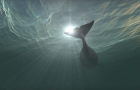
Understanding whales is a challenge for mere humans: they dwarf us in size (growing to be as large as a bus), far outlive us (living up to 200 years) and can easily avoid our prying eyes (diving as deep as 150m and staying submerged for up to an hour).
As with much else these days, drones, increasingly, are providing us with help. In the past, tracking whales relied on difficult, expensive and, ultimately, inadequate methods, relying primarily on observers on land or aboard ships or aeroplanes. Our first video this week, from the University of British Colombia, gives a brief introduction to how drones are being used to reveal more about the lives of whales – for the benefit of the whales themselves and the communities that rely on them. More information is available on the university’s website.
SEE RELATED: Editor’s briefing | What do you say that I am?
The second video, produced for the Arctic Currents project, goes much further in depth about whale behaviour, providing insights into a the annual cycle of bowheads in the waters off Alaska.
Bowheads, are an important element of Iñupiat culture, and their traditional knowledge, according to the film’s producers, has aided scientists understanding of the role the species plays in the Arctic ecosystem. (Yupi’ik and Iñupiat versions of the film are also available).
Whales, however, are more than just objects of study, and our second two videos offer perspectives of the importance whales and whaling hold for Northern communities. The first, from 2013, was produced Aboriginal Peoples Television Network, a Canada-based news outlet, and details the first bowhead whale hunt in Iqaluit after a century-long ban was lifted in 2011.
The final video, from Alaska – is doubly relevant as the American presidential election draws to a close – details the efforts of Mark Begich, a former US senator, to engage the people of the northern part of the state during his 2014 re-election bid.
Mr Begich ultimately lost. Let us hope the whalers, as well as those who rely on them, fare better
Latest news