Thin times for polar bears
iAbout Press releases
As part of our continuing efforts to bring you as much information about our region as possible we offer readers a press release service that allows private firms, public agencies, non-governmental organisations and other groups to submit relevant press releases on our website.
All press releases in this section are published in their full length and have not been edited.
If you have a press release or other announcement you would like to have published, please send it to [email protected].
We reserve the right to reject press releases we deem irrelevant or inappropriate.
All material submitted to The Arctic Journal, including pictures and videos, will be assumed to be available for publication by The Arctic Journal and its related entities.
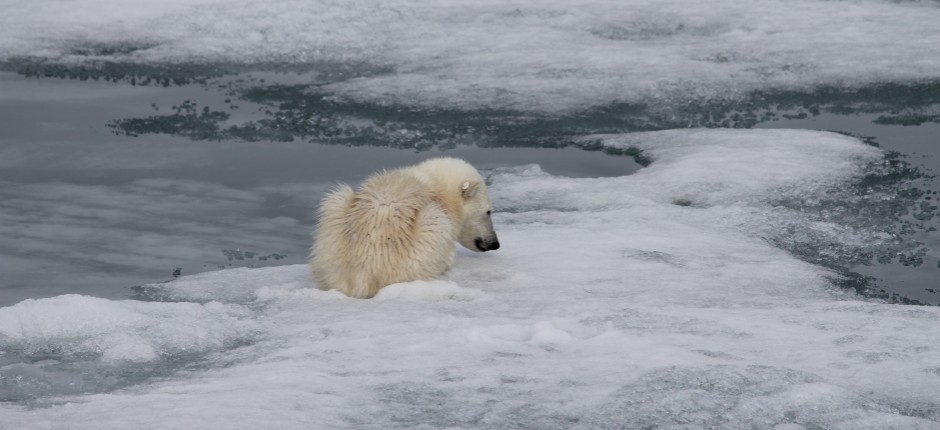
The double whammy of climate change and overhunting are having a negative impact on the nutritional health of the polar bear populations in Baffin Bay and Davis Straits in Greenland.
Researchers said the poor health among polar bears in Davis Straits is due to either to the growing population – which increases competition between individuals – or to the reduction in sea ice in the area.
They believe polar bears in Baffin Bay are thinner due to the reduction in sea ice. Greenlandic hunters confirm they have observed that declining sea ice levels creates greater competition and diminishes the population’s access to food
Time for bears to stand up and be counted
The Greenland Institute of Natural Resources (GINR), which conducts polar bear research together with scientists from Canada, Norway, the US and Denmark, along with hunters from Nunavut and Greenland, said there is an immediate need for a census of polar bears in Baffin Bay and the Kane Basin between Greenland and Canada.
The Canada-Greenland Joint Commission for Polar Bear has asked for a new population census on which to base new suggestions regarding the bear population. The last census of polar bears in the area was done in the 1990s, and calculations indicate that the total harvest of polar bears in Canada and Greenland is too great.
Bears in Baffin Bay and Kane Basin migrate between northwestern Greenland and Nunavut. The next biological advice on polar bears in the area from GINR is expected to be ready in 2014.
GINR research shows polar-bear habitat in northeastern Greenland has degraded substantially and researchers are keen to maintain an on-going evaluation of polar bear status in Greenland.
More bearable in Alaska
Meanwhile, in parts of Alaska, things are actually looking better for polar bears; a study of polar bears in the Chukchi Sea in western Alaska has detected no ill effects from the loss of sea ice.
While Alaskan polar bears living in the northern part of the state have shown signs of reduced body weight and high cub mortality due to diminished sea ice, the US Fish and Wildlife Service study of the waters between northwest Alaska and Russia indicates that those polar bears are as healthy as they were 20 years ago, according to the Alaska Public Radio Network.
Researchers believe that although the amount of sea ice has declined, polar bears still have enough time on the ice to catch as many seals as they need to survive. If the ice continues to melt at the current rate, they predict that Alaskan bears could face the same problems as those in Greenland.