Juneau: We have a problem
iAbout Press releases
As part of our continuing efforts to bring you as much information about our region as possible we offer readers a press release service that allows private firms, public agencies, non-governmental organisations and other groups to submit relevant press releases on our website.
All press releases in this section are published in their full length and have not been edited.
If you have a press release or other announcement you would like to have published, please send it to [email protected].
We reserve the right to reject press releases we deem irrelevant or inappropriate.
All material submitted to The Arctic Journal, including pictures and videos, will be assumed to be available for publication by The Arctic Journal and its related entities.
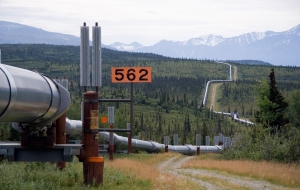
Alaska’s state government is almost entirely funded from oil taxes. So when the price drops, the markets pay attention. When its keeps doing so, they act.
Moody’s, a credit ratings agency, did just that yesterday, changing the state’s economic outlook to ‘negative’ from ‘stable’ and at the same time lowering the state’s bond ratings.
The move follows the precipitous decline of oil prices: a nearly 50% drop since June. But, the falling price was just one factor in Moody’s decision. Other oil-dependent economies, both in America and abroad, are grappling with a similar problem. They may yet see their ratings slashed, but in Alaska the problem is especially severe. Moody’s and other analysts are alarmed by the state’s reliance on oil as the source of 90% of its income.
SEE RELATED: An Alaska-size pot of gold
According to official figures, the state’s 2015 budget has been set at $6.1 billion. But that figure was arrived at earlier this year, when oil prices had yet to begin their slump in earnest. Assuming an average oil price of $76 per barrel in 2015, the state reckons it will get $2.6 billion in revenue, leaving behind a shortfall of $3.5 billion. Even that may be too optimistic; oil is currently trading in the neighbourhood of $50, a five year low.
Alaska will not go broke, neither this year nor next. Moody’s pointed out that the state has a “very large cushion” against volatility in the form of a $16.3 billion budget reserve (about three times its current annual spending). It also noted that the state typically underestimated its oil-income forecasting, which means that it may find extra money in the kitty at the end of next year.
But at some point, the price must rebound, and that situation underscores the instability of Alaska’s narrow economic base. Relying on oil can benefit the state when prices rise as much it punishes it when they fall, but, in the end, it leaves the economy at the mercy of global political and economic factors well beyond Juneau’s control. Building up a budget surplus when prices are high can help the state survive lean years, but this is not a permanent solution, Moody’s warns.
More worrisome for officials in Juneau should be the declining output of its North Slope reserves. Off-shore oil and the opening of the Arctic National Wildlife Refuge could provide new production fields, but the former remains well over the horizon. A low price of oil is also likely to put off interest in sinking money into its development.
Further, whether it is off-shore or on, any sort of new oil drilling is likely to be met with resistance from conservationists. Now, economists may join that chorus. Off-shore opponents will be further enthused by a White House announcement yesterday banning drilling in Bristol Bay.
In the meantime, Bill Walker, the state’s newly elected governor, and Byron Mallott, his lieutenant, have begun looking for ways to prune short-term spending.
“We invite all Alaskans to give us their thoughts,” Mallott said in a recent appeal to the public. “Every Alaskan will have an idea on how to deal with this situation. There is no smarter group than Alaskans to deal with Alaskan issues.”
Dealing with the global issue of oil prices will require input from a differently smart group.