More lines on the ice
iAbout Press releases
As part of our continuing efforts to bring you as much information about our region as possible we offer readers a press release service that allows private firms, public agencies, non-governmental organisations and other groups to submit relevant press releases on our website.
All press releases in this section are published in their full length and have not been edited.
If you have a press release or other announcement you would like to have published, please send it to [email protected].
We reserve the right to reject press releases we deem irrelevant or inappropriate.
All material submitted to The Arctic Journal, including pictures and videos, will be assumed to be available for publication by The Arctic Journal and its related entities.
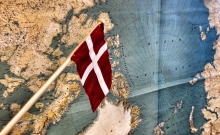
This week, the government of Denmark gave a Christmas surprise to the rest of the Arctic region when it announced that the data it would be submitting to the United Nations Commission on the Limits of the Continental Shelf (CLCS) would include the entitlement to the Lomonosov Ridge region, the ridge itself being an underwater chasm about 1,800km in length which stretches across the central Arctic Ocean.
While Denmark was long expected to clarify its sovereignty rights in the Arctic region, based on the extension of the continental shelf from Greenland, part of the Kingdom of Denmark, as Canada and Russia were in the process of developing their own assertions in the region. Yet what was surprising about the announcement was the size of the area which Copenhagen was declaring as a Danish holding, comprising approximately 895,000 square kilometres surrounding the ridge, and the fact that the area under declaration included the North Pole itself.
This data was a result of a continental shelf survey conducted over 12 years, resulting in the conclusion that the Lomonosov Ridge region, including areas of the adjacent Podvodnikov, Makarov and Amundsen basins, should be considered an extension of the continental shelf extending northwards beyond the existing 200 nautical-mile exclusive economic zone of the Greenlandic coast, and thus under Danish jurisdiction.
SEE RELATED: After Arctic Circle: who is an Arctic stakeholder today?
In addition to the size of the area in question, that the Danish declaration included the North Pole was a significant event in the on-going debates about Arctic sovereignty, as this was the first time an Arctic state made so overt a stance on the status of the Pole. In 2001, the Russian Federation made its own report to the CLCS which asserted that Russia’s own continental shelf extended northwards, to the North Pole itself, and six years later international attention was focussed on Russian submarine expedition, Arktika 2007, under the boreal ice to the North Pole which resulted in a titanium Russian flag being planted under the Pole, drawing criticism from Canada and the United States and suggesting to many outside observers that the melting Arctic Ocean ice would lead to growing challenges over potential northern resources.
The now-notorious 2008 report by the United States Geological Survey added still more fuel to speculation about an immanent Arctic ‘resource race’ by suggesting that the region may hold about 13% of unrecovered petroleum supplies (90 billion barrels) and perhaps 30% of the world’s natural gas (47.26 cubic metres).
In December 2013, Canada sought to clarify its own continental shelf in the Arctic region, which would include areas of the contested Lomonosov region and reach northwards to the North Pole itself. Since at least as far back as the Manhattan incident in 1969, when an American oil tanker bearing that name became the first commercial vessel to transit the Northwest Passage, Ottawa has been under pressure to better assert its Arctic claims, and the government of Prime Minister Stephen Harper had recently been seeking to further raise Canada’s Arctic profile.
The Danish submission to the CLCS was acknowledged to be overlapping those of Canada and Russia, and perhaps also those of Norway and the United States. The next step would likely involve long and difficult negotiations between Copenhagen and other Arctic parties via the mechanisms of the UN Convention of the Law of the Sea (UNCLOS) and the 2008 Ilulissat Declaration, which was adopted by the Arctic littoral states (Canada, Denmark, Norway, Russia and the United States) to better promote legal co-operation in the region.
Despite the magnitude of the Danish position on its Arctic sovereignty, it is unlikely that its CLCS submission will have a significant effect on regional security, despite the chilling of relations between the West and Russia, and any disputes arising from overlapping interpretations of the status of the Lomonosov region will likely remain firmly within the diplomatic realm for three reasons. First, there is a long history of sometimes-difficult Arctic sovereignty issues being settled at the negotiating table, including a 2010 agreement on the demarcation of the maritime border in the Barents Sea between Norway and Russia, a dispute once thought to be intractable. As well, the Hans Island dispute between Canada and Denmark has been a complicated issue but also one which has been addressed diplomatically save for the odd planting of rogue flags.
Second, as the above cases suggest, assertive unilateral activities in the Arctic have largely been avoided by all sides, due to the weak cost-benefit ratio for any regional government engaging in such activities. For example, Russia’s recent announcements that it was re-opening Arctic bases in Siberia should not be overanalysed given that the bases are well within Russian jurisdiction and are a product of expected increased use of the Northern Sea Route by civilian vessels.
SEE RELATED: Canada and Russia in the Arctic: the tie that binds
As for Denmark, it has indicated that it is ready and willing to commence negotiations with other littoral states based on its report to the CLCS, and would fully respect international law during the upcoming talks. Third, and also important, is that despite on-going talk of accessible Arctic resources, depressed global fossil fuel and commodity prices should waylay much talk about a mining and drilling bonanza anywhere in the Arctic, at least for the near future.
What may happen in the short term is that the Danish continental shelf submission may further affect future debate in Greenland about eventual independence, especially if regional negotiations over the Lomonosov Ridge result in a favourable outcome for Copenhagen. Russia, however, could be a wild card in the negotiations given the diplomatic situation between Moscow and Europe. A crucial test on that front may appear soon as the EU gets ready to re-apply as an observer in the Arctic Council despite Russia’s ill-disguised misgivings.
These events should also further spur debate about what will be the legal effects of an ice-free Arctic in summer months which would allow ships in transit the North Pole region outside of the established 200 nautical-mile exclusive zones of the littoral states. While this scenario may not happen for several decades yet, Arctic nations appear to be accelerating their planning for such an outcome. The negotiators will have their work cut out for them.
The author is a senior research fellow at the Norwegian Institute of International Affairs, Oslo.