Three countries, one pole
iAbout Press releases
As part of our continuing efforts to bring you as much information about our region as possible we offer readers a press release service that allows private firms, public agencies, non-governmental organisations and other groups to submit relevant press releases on our website.
All press releases in this section are published in their full length and have not been edited.
If you have a press release or other announcement you would like to have published, please send it to [email protected].
We reserve the right to reject press releases we deem irrelevant or inappropriate.
All material submitted to The Arctic Journal, including pictures and videos, will be assumed to be available for publication by The Arctic Journal and its related entities.
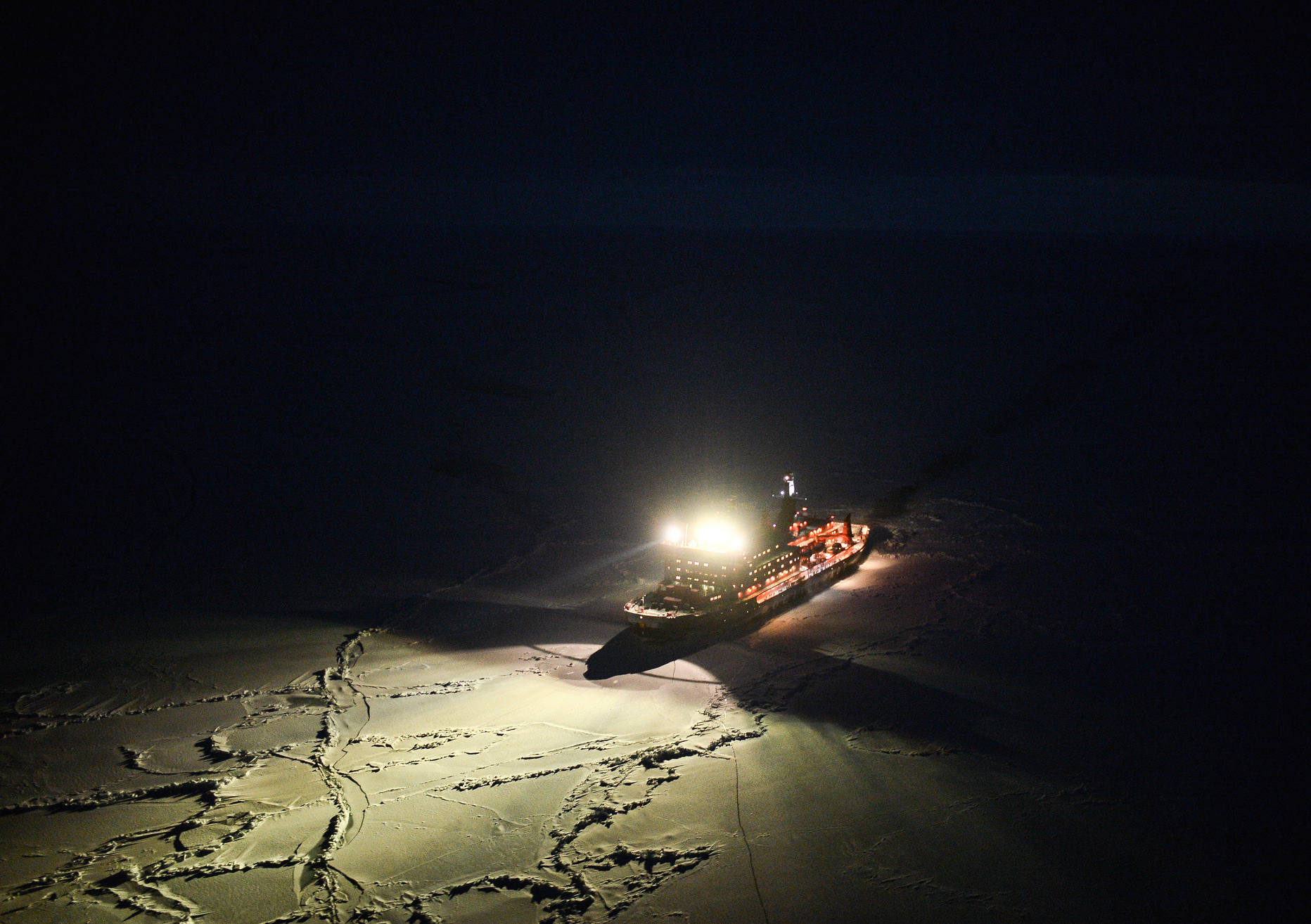
Russia, yesterday, filed a long-awaited claim to a large swath of continental shelf in the Arctic Ocean.
The claim, submitted under the United Nations Convention on the Law of the Sea, is notable for three reasons. Firstly, because it clearly documents that Denmark and Greenland have a competing claim to part of the continental shelf in the Arctic. The Russian claim overlaps part of the claim submitted jointly by Denmark and Greenland, in December.
All this means that Copenhagen must now be prepared to sink time and effort into an unpredictable territorial dispute with Moscow. This despite the fact that, in the end, it is Nuuk that stands to make the more tangible gains from the process. The discussion is essentially about the right to any underground resources in the relevant sections continental shelf, which, according to Nuuk’s Self-Rule Agreement with Copenhagen, ultimately belong to Greenland.
North Pole
Secondly, it is worth noting that the Russian claim encompasses the entire North Pole. The claim filed yesterday is an expansion of a 2001 claim, which ended in a point (think of a pizza slice) at the North Pole. This original claim made it possible for other countries to also claim part of the pole. This time, the claim extends past the North Pole and well onto the Greenlandic side.
The change indicates that Moscow is now also occupied by the political symbolism of the North Pole. In addition to the perceive potential of underground resources, such as oil and gas, a successful Russian claim to the North Pole would bring with it the Pole’s historical and political value. The increasing importance being placed on the pole was seen back in 2007, when the Mir-1 and the Mir-2, two submarines, planted a Russian flag on the ocean floor at the North Pole, some 4,300m below the ice cap above. Moscow reassured worried onlookers that the spectacle was merely a display of technical know-how, akin to America’s flag-planting on the Moon. The damage, however, was done, and suddenly many were concerned about Russia’s intentions in the North.
Canada poked to the fires last year, when Stephen Harper, its prime minister, unexpectedly broke an agreement with the Danes and suggested that the North Pole would be part of Ottawa’s Unclos claim. After a mission to the North Pole last year, Canadian ice-breakers are again this summer gathering data to support the country’s claim.
The Danish-Greenlandic claim encompasses some 985,000 million square kilometres of continental shelf that extends past the North Pole all the way to the border of Russia’s exclusive economic zone.
Conflict?
The third matter worth noting is how the timing becomes important.
Flemming Getreuer, the deputy director of GEUS, the Danish and Greenlandic geological survey, said on Tuesday that the “Russian claim cements the significant overlap between the claim made the Kingdom of Denmark on the one side, by Russia, on the other”. Russia’s claim, he explained, was a revision filed in 2001.
By revising an existing claim, Moscow runs a good chance an answer from the UN might be ready within a year to 18 months. For the Danes, Moscow may be handed a ruling that the continental shelf at the North Pole is, in fact, connected to Russia well before Copenhagen’s data gets evaluated; due to the queuing system at the UN, decision on the Danes’ own claim is unlikely to be made for a decade or so.
This means that even if the UN finds that continental shelf at the North Pole is also connected to Greenland, Russia will have already long since grown accustomed to calling it their own. That would give Moscow a potentially significant edge should it come to negotiations between Copenhagen and Ottawa over the competing claims.
Few foresee the situation devolving into open conflict. The overlap between the countries’ claims are marginal compared with the amount of continental shelf each country stands to win if they can resolve their differences peacefully at the negotiating table.
Even so, all three countries are keeping a close eye on developments. The 2007 Russian flag-planting and, in particular, the situation in Ukraine and Crimea, have cast doubt over Moscow’s intentions in the Arctic. Yesterday’s claim shows that the Kremlin places a value on the North Pole as a political symbol, as it had done for decades. This symbolism could be misused by ultranationalists or other groups, should their influence grow.
Greenpeace, a conservancy, responded to the Russian claim by repeating its call to declare the entire uninhabited area around the North Pole as a sanctuary. The same idea had previously been aired by Kuupik Kleist, a former Greenlandic premier. At the time, Mr Kleist’s suggestion was welcomed t some extent by Copenhagen, even if this was merely to keep the peace with Nuuk. Now that Mr Kleist is gone from Greenland politics, Copenhagen’s support for the idea has gone from lukewarm to non-existent. That is one at least one point on which Copenhagen would find itself in agreement with Moscow.
The author is a Danish journalist who has written extensively about Arctic issues, including most recently The Greenland Dilemma.