The “essential” treaty
iAbout Press releases
As part of our continuing efforts to bring you as much information about our region as possible we offer readers a press release service that allows private firms, public agencies, non-governmental organisations and other groups to submit relevant press releases on our website.
All press releases in this section are published in their full length and have not been edited.
If you have a press release or other announcement you would like to have published, please send it to [email protected].
We reserve the right to reject press releases we deem irrelevant or inappropriate.
All material submitted to The Arctic Journal, including pictures and videos, will be assumed to be available for publication by The Arctic Journal and its related entities.
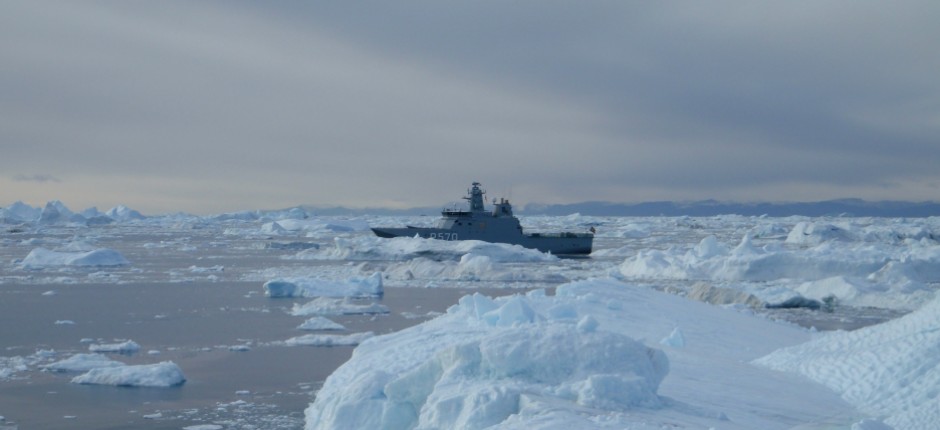
Agreeing an Antarctic-style treaty in the Arctic would be an arduous process, but it would ultimately benefit the northern polar region, argues a retired US admiral in a recent Foreign Policy column.
“Negotiating such an accord for the Arctic would be much more difficult than the Antarctic; probably close to the challenge of the Unclos process, which lasted over nine years and required the efforts of literally thousands of participant negotiators. All the more reason that we get started sooner rather than later, and to use the existing success of the Antarctic Treaty as a model,” writes James Stavridis, currently the dean of the Fletcher School of Law and Diplomacy at Tufts University.
Stavridis, though firmly supporting the idea of an Arctic treaty, warns against making false analogies between the two regions. Similarities abound, but the “two regions are quite different”, he writes.
SEE RELATED: Putting conflicts on ice
The primary difference: Arctic states already control much of the North. That makes coming up with a treaty more difficult, but latent tension among the five Arctic coastal states, as well as any outsiders taking an interest in the region, only underscores the need for international rules.
“As pressure builds in the High North, having an actual treaty focused upon it – as exists in Antarctica, today – is essential.”
The Arctic Council, according to Stavridis, would be the logical place to begin such a dialogue, with co-operation from the UN and its constituent organisations, such as the International Maritime Organisation.
The Arctic Council is often singled out as a model of co-operation in international affairs. But seven of the eight Arctic Council states are solidly in the Western camp – either as members of Nato or the EU – and strained relations between the West and Russia elsewhere have led to concerns that conflicts could be projected into the Arctic.
Stavridis is the latest prominent voice to call for some sort of treaty to govern the Arctic.
SEE RELATED: The polar bear in the room
Some, including the European Parliament, urge environmentally based treaties, while others suggest making it nuclear-free zone.
Stavridis also accepts that it would likely be too difficult to fully constrain military activity. However, in a recent interview with Sermitsiaq, this website’s sister publication, Sergey Batsanov a Russian who heads a Swiss think-tank, made the case for full de-militarisation.
“It is important to have an east-west partnership in order to ensure peaceful co-existence,” Batsanov said. “It is the only way we can make sure that we can take advantage of the new opportunities that climate change brings with it, as well as provide economic growth for the region. A military build-up would be a threat to the peaceful exploitation of new fisheries, mineral resources and shipping routes.”
Stavridis’s call to set the region also runs counter to the current process of states staking claims to the extended continental shelf in the Arctic Ocean.
In December, Denmark caught observers off guard by claiming territory on the Russian side of the North Pole. Russia is expected to make a competing claim of its own later this year. Canada, too, may also put in a ticket for the North Pole.
This article is published as part of our Keeping the peace series, an on-going effort by Sermitsiaq, our sister publication, and The Arctic Journal to focus on the issue of threats to regional stability.