Fourth-lowest August sea-ice extent
iAbout Press releases
As part of our continuing efforts to bring you as much information about our region as possible we offer readers a press release service that allows private firms, public agencies, non-governmental organisations and other groups to submit relevant press releases on our website.
All press releases in this section are published in their full length and have not been edited.
If you have a press release or other announcement you would like to have published, please send it to [email protected].
We reserve the right to reject press releases we deem irrelevant or inappropriate.
All material submitted to The Arctic Journal, including pictures and videos, will be assumed to be available for publication by The Arctic Journal and its related entities.
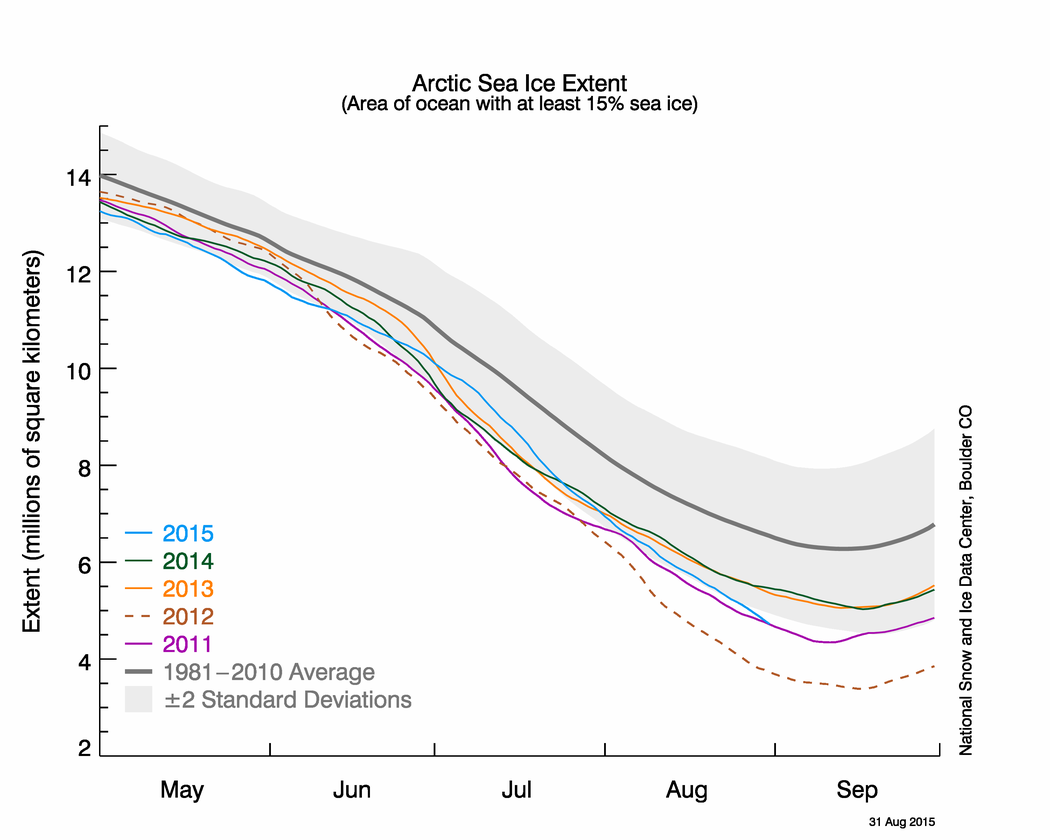
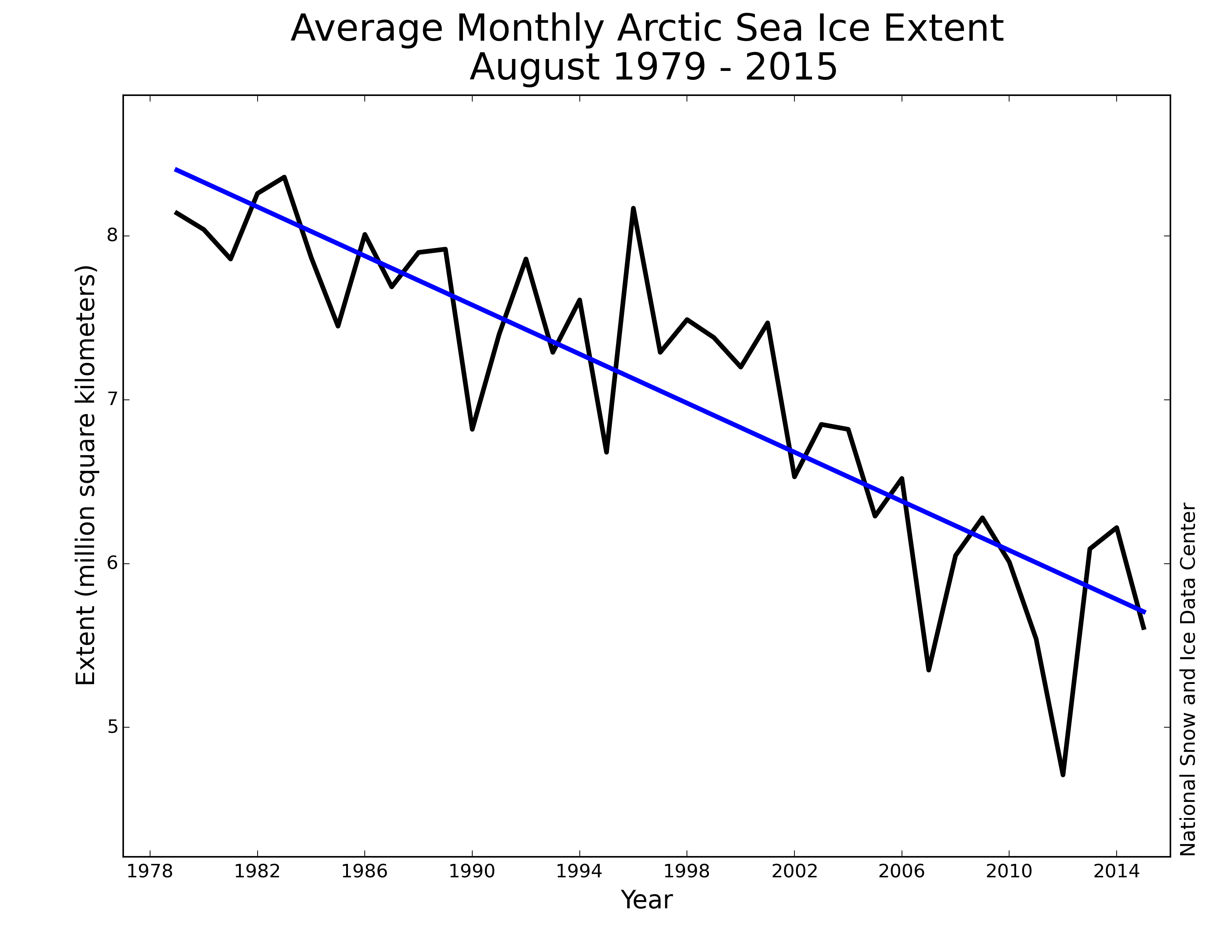
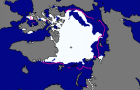
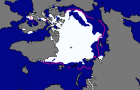
At the close of the final full month of the summer melting season, Arctic sea ice was tracking towards its fourth-lowest extent since 1979, when satellite record-keeping began.
In its latest monthly sea-ice update, the National Snow and Ice Data Centre, a Colorado-based research outfit, reports that the August extent was the fourth-lowest on record, falling well off the “pronounced” decline that led to July narrowly miss an all time record for that month.
Ice-loss for August averaged 75,100 square kilometres per day. While this was well above the 1981-2010 average of 57,300 square kilometres per day, the daily loss in the record-setting 2012 melting season was 89,500 square kilometers per day.
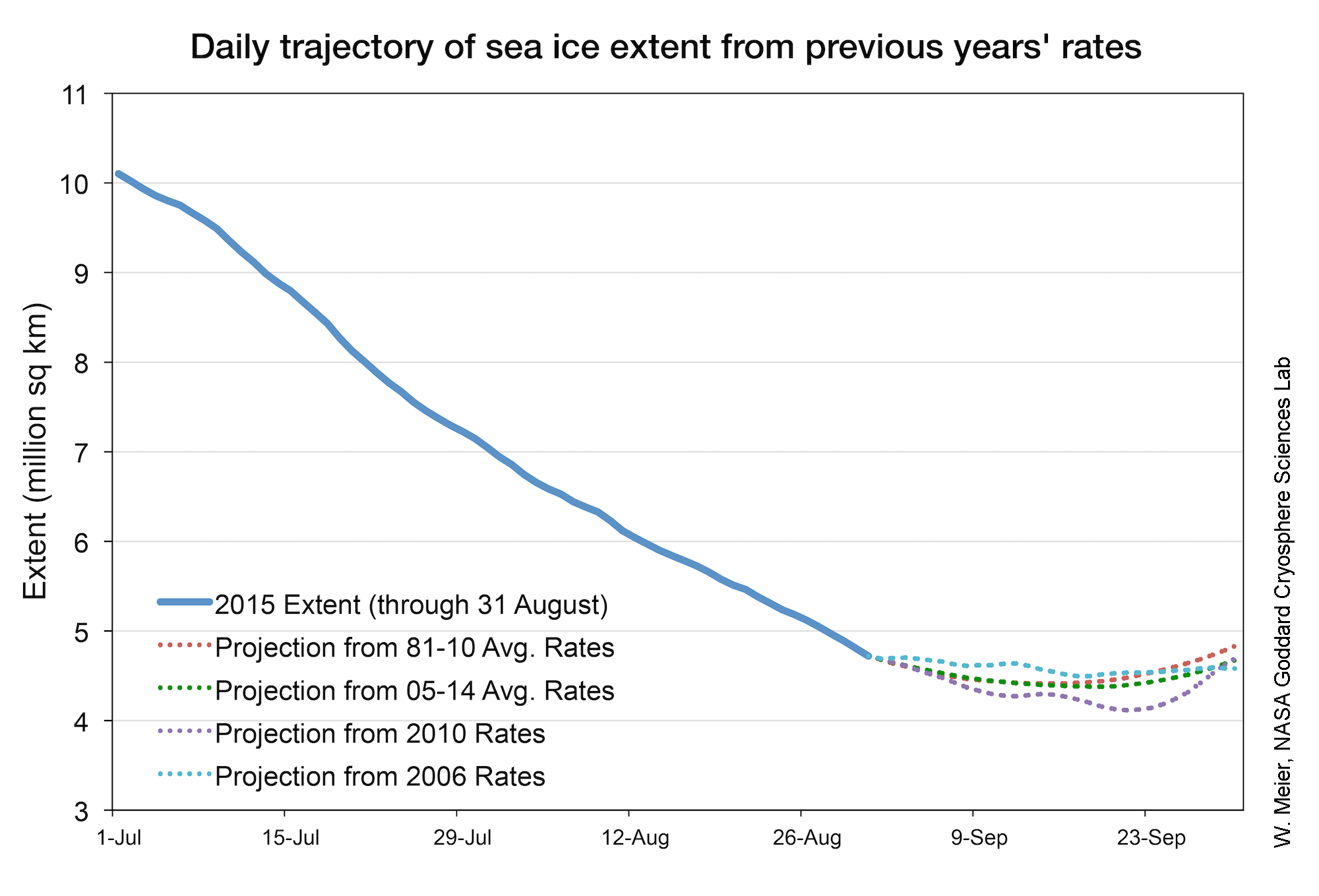
Based on the current rate of loss, the NSIDC forecasts it will be the fourth-lowest on record. Should the rate increase during September, the 2015 minimum extent could end as the third-lowest, surpassing 2011, and perhaps even second-lowest, surpassing 2007, on record. (See chart below.) The five lowest recorded extents have all occurred since 2007.
For an explanation of how the seasonal minimum is predicted, please refer to the NSDIC website.
The seasonal minimum is expected in the second half of the month, but the date can vary based on the actual rate of decline. This winter, we also saw the seaonal maximum arrive at its earliest date ever, only to be followed by periods of partial rebound.
Ice levels in August were below average throughout the entire region, with the exception of Baffin and Hudson bays. The NDSIC, however, points out that in the Beaufort Sea, there were extensive stretches of with less than 70% ice cover, and only limited patches of multi-year ice.
The low ice levels in the Beaufort Sea, according to the NSIDC, are the result of an early on-set of the melting season and wind patterns that prevented warm water from spreading further into the Arctic Ocean.