A risk they can’t refuse

iAbout Press releases
As part of our continuing efforts to bring you as much information about our region as possible we offer readers a press release service that allows private firms, public agencies, non-governmental organisations and other groups to submit relevant press releases on our website.
All press releases in this section are published in their full length and have not been edited.
If you have a press release or other announcement you would like to have published, please send it to [email protected].
We reserve the right to reject press releases we deem irrelevant or inappropriate.
All material submitted to The Arctic Journal, including pictures and videos, will be assumed to be available for publication by The Arctic Journal and its related entities.
When native Alaskans speak, the feeling, according to Edward Itta, is that no-one is listening.
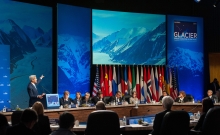
Addressing the Arctic Encounters Symposium in February, Mr Itta, an Iñupiat Eskimo who is currently the mayor of the North Slope Borough, recalled how, in 1977, when the federal government was conducting studies that would eventually lead to a ban on whaling, the experience of native communities “didn’t seem to matter”.
In the end, he noted, federal authorities made their decision based on the statements of a single scientist. “That counted more than the entire sum of our traditional knowledge,” he said.
While that was then, it may also explain why today, the Arctic Slope Regional Corporation, which represents the business interests of Arctic Slope Iñupiat, launched an advertising campaign aimed at informing lawmakers in Washington about the role that Arctic energy development plays in supporting native communities.
SEE RELATED: A rapidly fraying lifeline
The advert (at end of article), which will run over the next five days, is timed to coincide with the visit of Barack Obama to the state next week. Though Mr Obama is currently taking heat from environmentalists for permitting offshore drilling in the Chukchi Sea, he has halted exploration, both on and offshore, in the past year. And since he will be in the state to promote action to address global warming, native groups worry he may have more climate tricks up his sleeve.
Native groups would rather he support “responsible energy production” in Alaska. That, says Crawford Patkotak, the chairman of the ASRC board of directors, would put the president in line with the wishes of Arctic people, who see such ventures as vital to their livelihood.
Indeed, oil provides most of the state’s income, and in Arctic communities, such as Barrow, it has paid for things like roads and, recalled Mr Itta fondly earlier this year, flush toilets.
Still, Mr Itta, like other members of his community, recall being conflicted about oil drilling, particularly offshore, where a spill would disrupt whale hunting, which he said draws coastal communities together.
“We’re caught in the middle of forces of protection and development,” he said.
Arctic Slope Regional Corporation argues that both can be successfully combined. Other native groups say this is a position they understand, even if they would choose differently.
“There is a difference of opinion within native groups,” says James Gamble, the executive director of the Aleut International Association. “Resource development has brought benefits to a lot of indigenous groups in Alaska, but the connection to the land provides a sense of security that forms a great part of indigenous cultural life.”
SEE RELATED: Editor’s Briefing | Stash or spend?
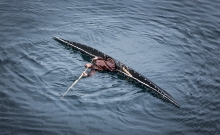
Take for example walrus hunting, an important activity for the Aleut. Mr Gamble reckons that if they had to stop hunting walrus, “people would adapt, but their culture would be lost”.
That, he says would open the door to issues like identity loss, mental health issues and migration away from Aleut communities.
The Aleut, however, are fortunate, since many can rely on fishing as both a commercial and a subsistence activity. “That makes communities more resilient.”
It also means that the Aleut can afford to carefully consider the risk associated with having firms like Shell, which is seeking to stockpile drilling equipment in Dutch Harbour, operating in their midst.
SEE RELATED: The Arctic is serious business
Most people living in the area recognise that allowing Shell to use their port as a staging point for its drilling in the Chukchi would be a financial windfall, but they are also aware that the Noble Discoverer and the Kulluk, two Shell drilling vessels, ran aground in 2012 in the Aleutian Islands.
Both were in transit (the Chukchi is over 2,000km to the north of the Aleutians) but, says Mr Gamble, it is something Aleuts think about.
“Most people don’t want anything to do with something that would endanger fishing, and they fear this would.”
Still, what they want even less, Mr Itta made clear in February, is to have their future shaped by someone else.
“It disappointed me to have to hear presidential edicts that affect my life on CNN,” he said.
Perhaps Washington will respond differently when the same method is used against them.