Fear and scavenging in Ittoqqortoormiit
iAbout Press releases
As part of our continuing efforts to bring you as much information about our region as possible we offer readers a press release service that allows private firms, public agencies, non-governmental organisations and other groups to submit relevant press releases on our website.
All press releases in this section are published in their full length and have not been edited.
If you have a press release or other announcement you would like to have published, please send it to [email protected].
We reserve the right to reject press releases we deem irrelevant or inappropriate.
All material submitted to The Arctic Journal, including pictures and videos, will be assumed to be available for publication by The Arctic Journal and its related entities.
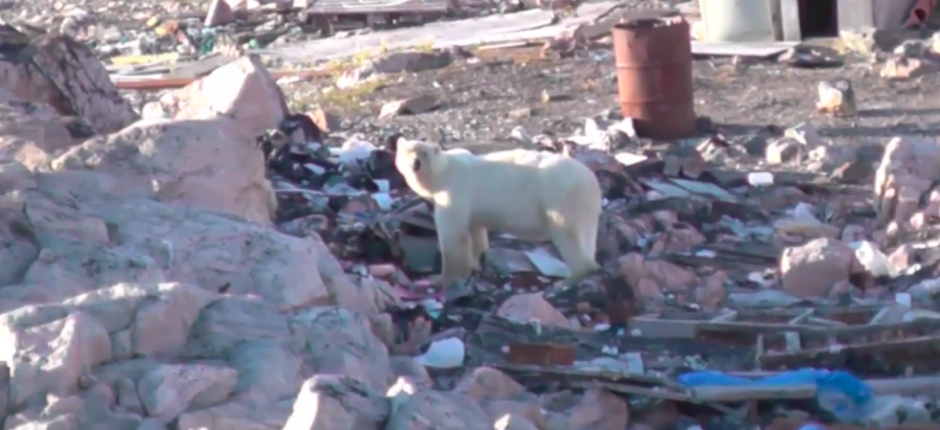
One of the reasons why people in the South find polar bears so adorable is because they do not have to worry about being attacked by them. For Northern residents, the iconic animal, long seen as a resource, has in recent years become a worry.
Faced with a shrinking habitat, polar bears are increasingly crossing paths with humans. Most run-ins result in harm to neither man nor beast, but in 12 instances through September of this year, they turned out badly for the bear.
The number, reported by the WWF, a conservancy group, in a study released today, is a record. Between 2007 and 2012 the total was 35.
SEE VIDEOS: To feed and to fear (at end of article)
For humans, meeting a polar bear in its natural habitat may be nerve-wracking, but it is rarely deadly. In Greenland, no humans have been killed by a polar bear in the past century. Like with other human deaths caused by large carnivores, the deaths that do occur are highly publicised (such as was the case in August, when a British teenager died after being mauled by a polar bear on Svalbard) and have an influence on how the animals are perceived, the study notes.
Nevertheless, polar bears are a fact of life in Greenland, and in areas where the animals are known to range, it is required to be armed when travelling outside settlements. But what is different these days, says Charlotte Moshøj, a wildlife biologist and the author of the report, is that bears are increasingly making their way into settled areas, where there is a greater potential for harm to be done.
“There have always been polar bears in Greenland,” she says, “but now they are found different places than they were before.”
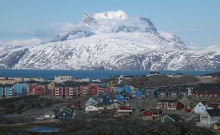
Moshøj based her study partly on research conducted in Ittoqqortoormiit, an east-coast town of 400 that has a particularly high rate of run-ins. (During her two weeks in the town, four bears were sighted in the vicinity, one of which was shot after hunters proved unable to scare it off.) Hunters described needing to travel for days to find signs of polar bears in the past. Now, the first indications can be found just a few kilometres outside the town.
SEE RELATED: Hunters 5-Polar bears 0
The population of polar bears in eastern Greenland is unknown, but Moshøj rules out the possibility that the increased sightings are the result of a growing population – of either humans or polar bears.
Global warming and melting ice, she points out, mean that more polar bears are concentrated in smaller areas. “There aren’t more bears, there is less habitat,” she says.
Another reason for the spread, the report points out, is a declining number of hunters and a growing concentration of human population in fewer settlements. With less human activity outside towns to scare them off, polar bears can range further before coming into contact with people.
The increasing number of conflicts is consistent with observations made of other large carnivores believed to be affected by global warming, Moshøj says. “When animals change their behaviour, it is a sign that something is amiss.”
SEE RELATED: Close encounters of the polar bear kind
Even though global warming is at the root of the problem, the report makes several recommendations for how to reduce the number of run-ins, such as organised patrols and improved signage.
For the people of Ittoqqortoormiit, the solution may be as simple as finding new ways to store walrus and seal meat used to feed dogs. Similar measures could be taken in other areas, though in places where fish is traditionally air-dried, coming up with an alternative method could prove more difficult, Moshøj admits.