Mid-August sea-ice extent falls to three-year low
iAbout Press releases
As part of our continuing efforts to bring you as much information about our region as possible we offer readers a press release service that allows private firms, public agencies, non-governmental organisations and other groups to submit relevant press releases on our website.
All press releases in this section are published in their full length and have not been edited.
If you have a press release or other announcement you would like to have published, please send it to [email protected].
We reserve the right to reject press releases we deem irrelevant or inappropriate.
All material submitted to The Arctic Journal, including pictures and videos, will be assumed to be available for publication by The Arctic Journal and its related entities.
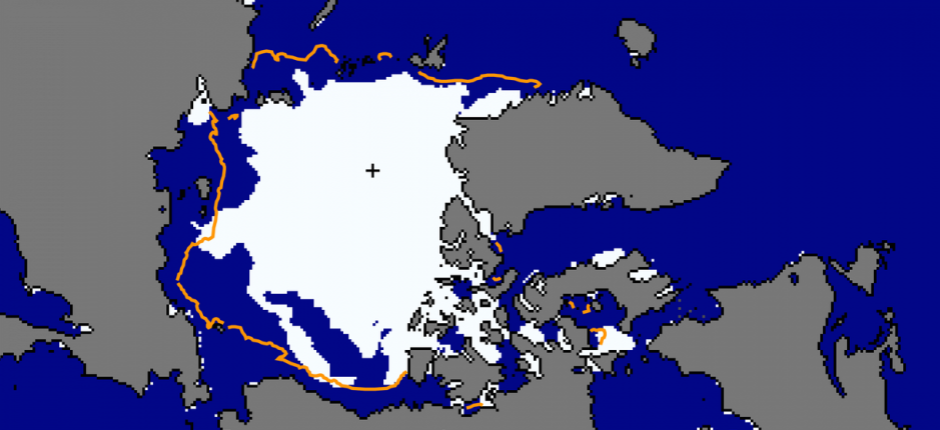
Sea-ice extent at mid-month has fallen to its thrid-lowest level since 2010, according to the National Snow and Ice Data Center, a Colorado-based research outfit.
At the end of July, the extent was on par with the 2013 and 2014 figures for those months. During the first two weeks of August, the rate of ice retreat slowed compared with July but remained above average.
The NSDIC calculates that the mid-August extent was 1.35 million square kilometers below the 1981-2010 average, but 1.17 million square kilometers above the level for the same date in 2012, the year of the record-low extent.
After being heavily iced into July, Canada’s Baffin and Hudson bays have melted out, according to the NSIDC. The Northwest Passage, on the other hand, is still blocked by a “considerable” amount of ice. The NSIDC notes, however, that narrow openings in the ice suitable for navigation may have developed.
SEE RELATED: Melting above their weight
In Alaska, the NSDIC recorded large areas of open water and expanding areas of low-concentration ice in the Beaufort and Chukchi seas. Most of the remaining ice appears to be a combination of “fairly thick” multi-year ice and first-year ice that is likely to melt before the September minimum.
Although ice in the eastern Arctic remained more consolidated, the Northern Sea Route, north of Russia, appears to be fully open. Although large amounts of ice were reported north of the Taymyr Peninsula and the Severnaya Zemlya islands, navigation was possible.