Full funding ahead
iAbout Press releases
As part of our continuing efforts to bring you as much information about our region as possible we offer readers a press release service that allows private firms, public agencies, non-governmental organisations and other groups to submit relevant press releases on our website.
All press releases in this section are published in their full length and have not been edited.
If you have a press release or other announcement you would like to have published, please send it to [email protected].
We reserve the right to reject press releases we deem irrelevant or inappropriate.
All material submitted to The Arctic Journal, including pictures and videos, will be assumed to be available for publication by The Arctic Journal and its related entities.
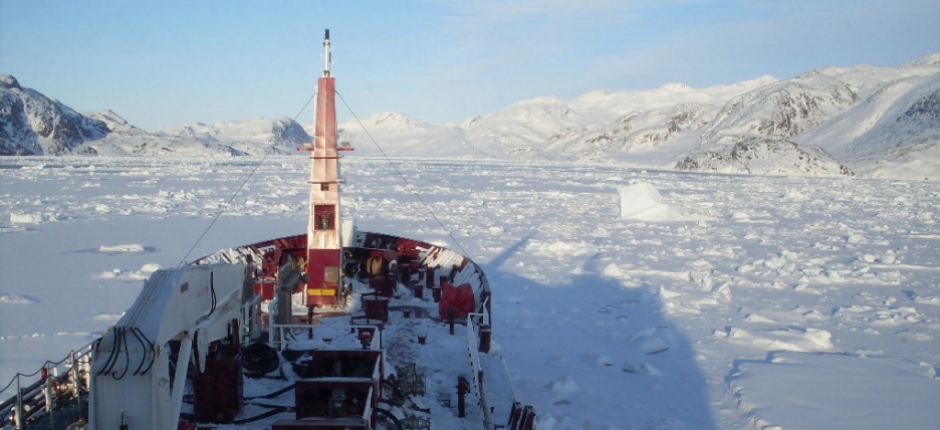
It is no secret in Ottawa that much needs to be done in order to prepare Canada’s Northwest Passage for the expected increase in the number of ships travelling through the waterway.
Most notably, a report, presented to parliament last year, concluded that the Northwest Passage – even with a focus by Stephen Harper, the prime minister, on economic development in the North – remains “inadequately surveyed and charted”.
It pointed out, for example, that mariners were still relying on maps that were produced 40 years ago. Without proper funding, however, necessary updates were unliklely anytime soon.
SEE RELATED: A race against commerce
Now though two recent developments may make it more likely that the lot of mariners sailing in the region could improve somewhat.
Firstly because the goverment has managed to find more money to carry out mapping. By spending C$22.7 million ($17 million) over the next four years, the Harper government, it was announced last week, hopes to improve marine transportation in the Arctic by providing funding to the coast guard to purchase new map-making sonar. The money will also be spent on reviews of navigation services and infrastructure needs, improving search and rescue capabilities and discussing marine transport with coastal communities.
In addition, another C$34 million will be spent over the next five years to fund navigational warning services in the Arctic.
Even though the report suggested, and the government accepted, that more money needed to be spent on mapping, sceptics immediately noted the timing of last week’s announcement: just days before Mr Harper dissolved parliament and called for an election, and amid a flurry of new initiatives.
SEE RELATED: Editor’s Briefing | Shipping
If the political overtone made it hard to get overly enthused about the announcement, the second development, which does not involve any additional funding, may have gone down easier.
According to the CBC, a public broadcaster, new research from the Laboratory of Cryospheric Research, at the University of Ottawa, may be able to improve maritime safety in the Northwest Passage by making it easier to predict the development and motion of icebergs.
The study, which included to data collected from 40 glaciers over the past 25 years, could help identify where icebergs are being produced.
In the end, according to Luke Copeland, the laboratory’s director, that could improve safety by helping to prevent collisions between icebergs and ships.
The report’s findings will be presented to federal officials and shipping firms on August 17. Given the shortcomings pointed out in last year’s report, they will certainly be welcome.