In the name of Nuuk
iAbout Press releases
As part of our continuing efforts to bring you as much information about our region as possible we offer readers a press release service that allows private firms, public agencies, non-governmental organisations and other groups to submit relevant press releases on our website.
All press releases in this section are published in their full length and have not been edited.
If you have a press release or other announcement you would like to have published, please send it to [email protected].
We reserve the right to reject press releases we deem irrelevant or inappropriate.
All material submitted to The Arctic Journal, including pictures and videos, will be assumed to be available for publication by The Arctic Journal and its related entities.
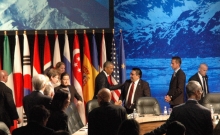
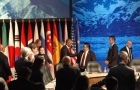
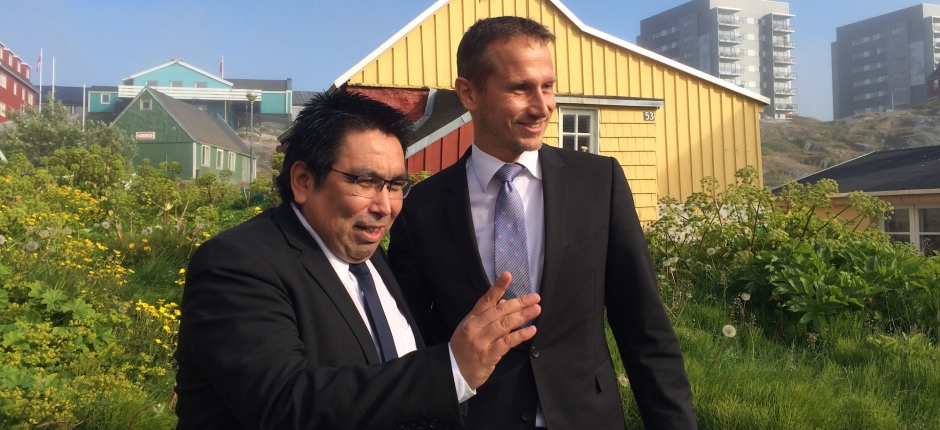
Denmark’s foreign minister, Kristian Jensen (pictured, right), met on Monday for the first time with his Greenlandic counterpart, Vittus Qujaukitsoq (pictured, left). It is likely the first of many such get-togethers.
Mr Jensen, who assumed office after the Danish general election in June, and Mr Qujaukitsoq have a number of issues on their agenda that, though they primarily affect Greenland, must be dealt with by diplomats in Copenhagen.
These include topics such as competing territorial claims with Russia, the EU’s ban on sealskin imports, whaling and fisheries.
SEE RELATED: Editor’s Briefing | Foreign relations in the Kingdom of Denmark
Both Greenland and the Faroe Islands, the third member of the Kingdom of Denmark, have their own foreign ministers and administer, to some extent, their own external relations. International affairs remain Copenhagen’s remit, and the meeting is a sign that Mr Jensen intends to continue the practice of consulting his foreign-policy colleagues on matters that concern them.
“If anything, the new government seems even more eager to preserve the peace with Nuuk than the old,” says Martin Breum, a Danish journalist who specialises in Arctic issues. “They want to retain amicable working relations with Greenland.”
He noted that Mr Jensen’s calls responded directly to two of Nuuk’s main concerns: involving Greenland deeper in matters of foreign policy and resolving all issues surrounding Thule Air Base, a US Air Force base currently at the centre of a dispute over a botched tendering.
“Those are sure hits in Nuuk,” Mr Breum says, noting that sticky issues, like Greenland’s poor economic outlook, privatisation of publically run enterprises and uranium, were all safely off the agenda.
SEE RELATED: Starting from Scratch
In the foreign-policy area, Arctic issues will loom, both in the short and long term.
Firstly, both foreign ministers are preparing to attend a meeting of Arctic foreign ministers at the end of August, and later in the year, Mr Qujaukitsoq will be permitted to make Greenland’s case during meetings between Mr Jensen and foreign ambassadors in Copenhagen.
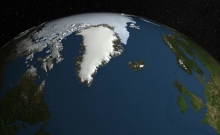
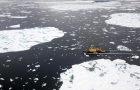
Yet the largest, if least immediate, matter to be dealt with will be the overlapping claims to the continental shelf at the North Pole. The Danes submitted their claim to the UN last year. Russia put in a revised claim earlier this month.
That Moscow’s claim overlaps Copenhagen’s own came as no surprise to the Danes, Mr Jensen told journalists after yesterday’s meeting.
SEE RELATED: Greenland to remain close to Denmark
What’s more, he said, the length of time that will pass until the geological data that forms the basis for the claims (as long a decade, according to some estimates) means the matter can be put on the back-burner for the time being.
“Right now we are taking it easy with regards to the Russian claims. Maybe one day the geological answer from the committee will become of political importance.”
But while Copenhagen is choosing to downplay any possible tensions with Moscow, Mr Jensen has made it clear that it is still taking the process seriously: some 330 million kroner ($49 million) will be spent gathering data and supporting its claim. The goal, meanwhile, remains clear: bring as much territory as possible under Danish control. Underground resources are one reason, another is the benefit of clearly defined borders, but there is also another.
“The country that controls the territory can decide which environmental rules apply,” Mr Jensen told DR, a public broadcaster, prior to departing for Nuuk Monday morning. “I’d rather have Danish than Russian regulations.”
SEE RELATED: Increasingly independent, diplomatically speaking
Even with the symbolic and potential economic value associated with being able to claim the North Pole, Copenhagen expects that Moscow will abide by the 2008 Ilulissat Declaration, obliging Arctic states to resolve territorial differences through negotiation.
“The process has begun,” Mr Jensen told DR. “Even though it involves muscle flexing, there are still certain rules that even Russia is abiding by.”
The competing claims, he reckoned, could be kept separate from other areas of tension that have arisen between Russia and the West, but doing so would require both sides to continue to speak with each other. “You can’t move Russia. It is where it is geographically.”
Moving it at the negotiating table, even with Nuuk’s full backing, may prove equally difficult.